The 16 Associations test: how to take it and how to read the result
16 Associations is a self-reflection exercise. You pick a topic that bothers you, write down 16 words you associate with it, and fold them in pairs until one word is left. That last word often lands far from where you started, and it is worth thinking about.
Each column below is explained on a real example taken in the app, followed by an AI analysis of the same test.
What it has to do with Jung
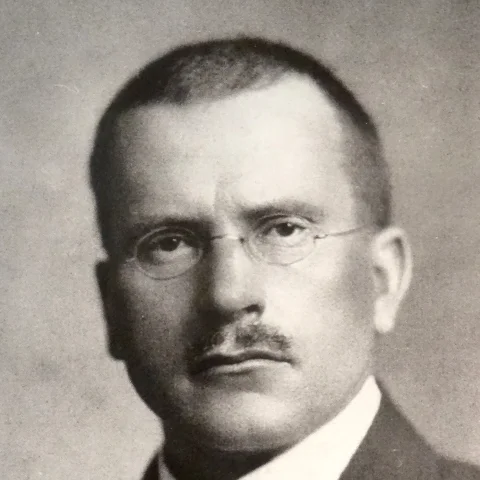

The exercise is often called "Jung's test", although Jung did not invent it.
From late 1900 Carl Gustav Jung worked at the Burghölzli psychiatric clinic in Zurich, headed by Eugen Bleuler. Starting in 1904, Jung, Franz Riklin and other doctors at the clinic published studies of the word association experiment. A subject heard about a hundred words, one at a time, and answered each with the first word that came to mind, as fast as possible. Reaction times were measured with a stopwatch to a fifth of a second. Then the list was read again and the subject tried to recall the earlier answers.
Jung paid attention to the disturbances: long pauses, no answer, repeating the stimulus word, odd answers, mistakes on the second run. He explained them as moments when a word touched an emotionally charged theme, and he called these themes "emotionally toned complexes". That is where the everyday word "complex" comes from.
In 1907 Jung ran the experiment with the American researchers Frederick Peterson and Charles Ricksher while recording skin conductance and breathing. When money went missing at the clinic in 1908, Jung put together a word list, identified the nurse from her answers, and she confessed. Historians count these experiments as part of the prehistory of the lie detector, although courts had given up on the method by the 1910s. In September 1909 Jung lectured on the association method at Clark University in the United States, where he traveled with Freud.
The 16 → 8 → 4 → 2 → 1 pyramid came later, and nobody knows who came up with it. Jung's subjects answered a hundred different words, not one topic, and nobody folded their answers into a final word. What the two share is one idea: a quick answer you don't think over can lead to something that matters to you. Free association, which descriptions of the exercise often mention, was Freud's method, and in dream work Jung moved away from it.
There is no research on how accurate 16 Associations is. Treat the result as a prompt to think about yourself. It is not a diagnosis.
How to take the test
Choose a topic that causes tension or dissatisfaction: money, a relationship, work, health, your parents, or a decision you keep putting off. One word or a short phrase is enough.
Write down 16 words or short phrases that come to mind when you think about it. Take whatever comes first and don't correct yourself.
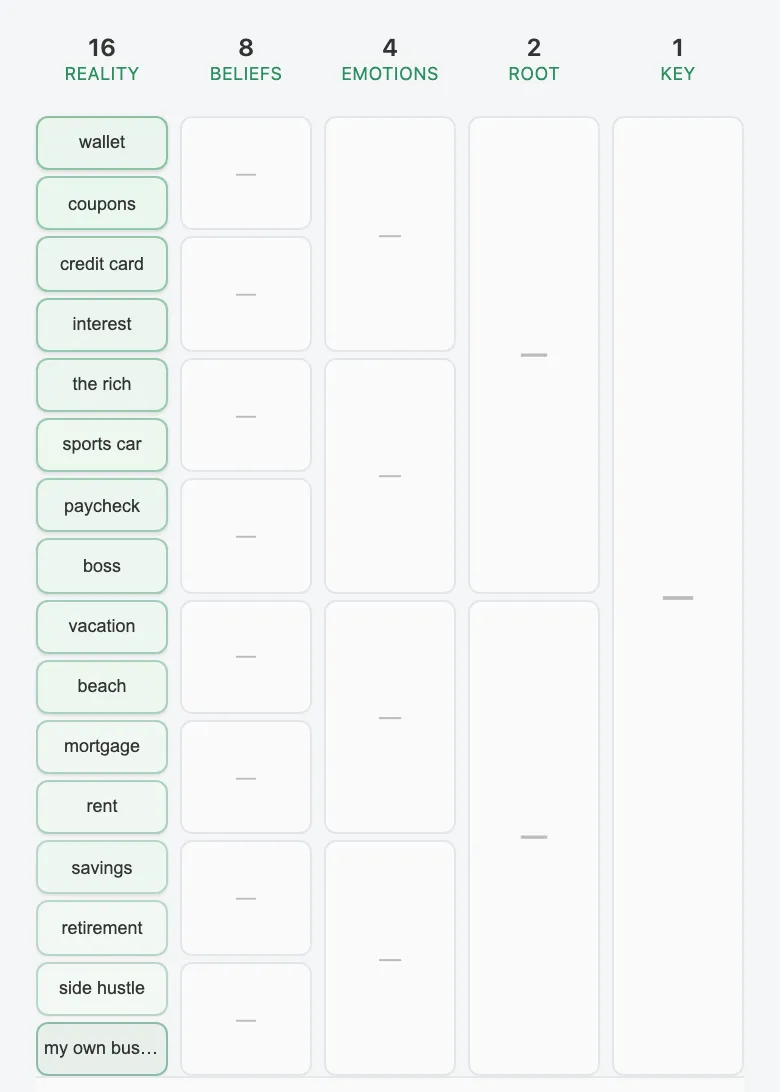
Then the words are folded in pairs: the first with the second, the third with the fourth, and so on. For each pair you write one word that connects them. Sixteen words become eight, eight become four, then two, then one.
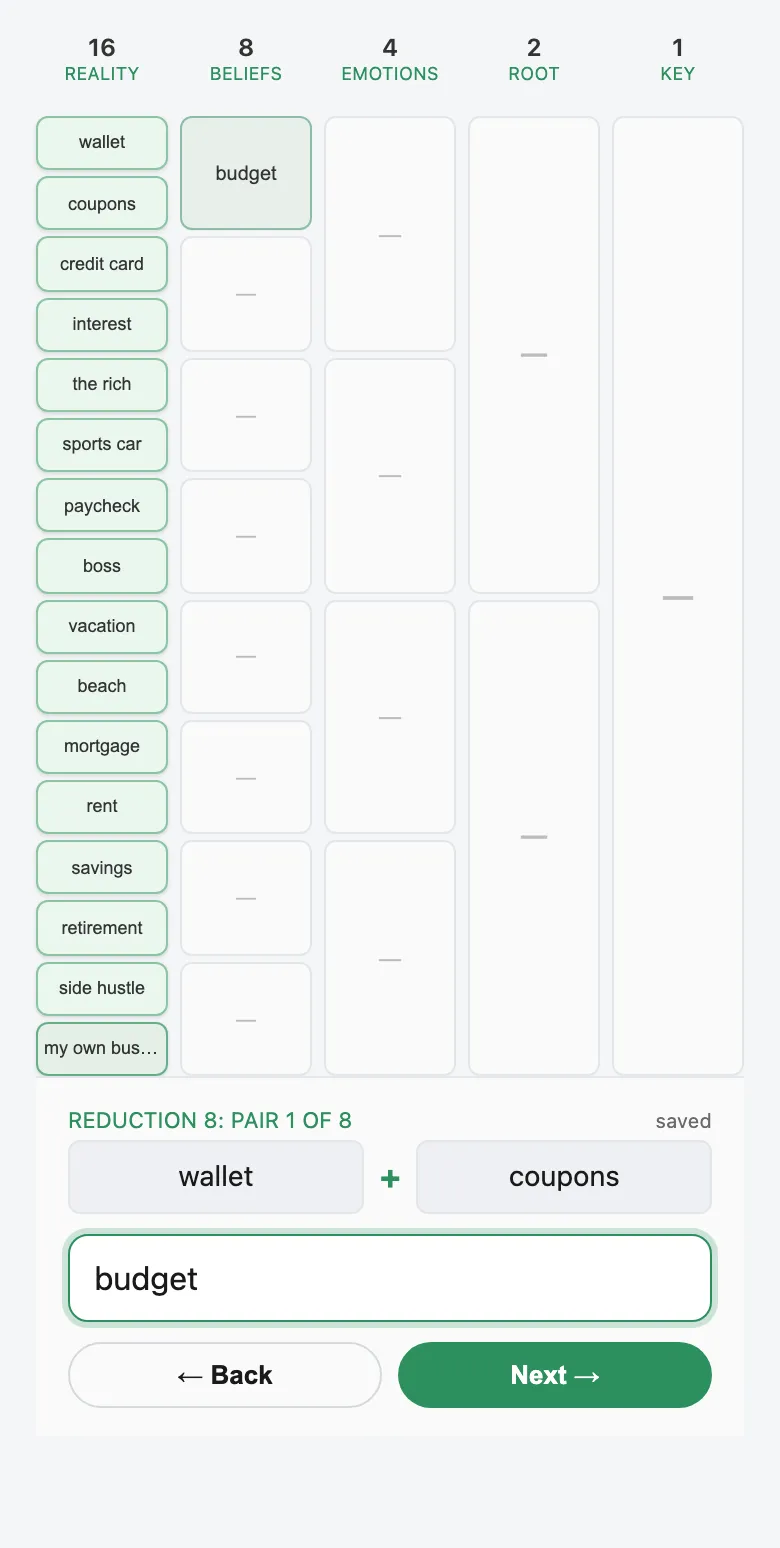
The app shows one cell at a time, and the pyramid fills in as you go. You can take the test without signing up. An account is only needed to save the result.
What the columns mean
The columns are read as layers, from the surface down:
- 16, reality: how people usually talk about the topic, everyday words and stereotypes;
- 8, beliefs: conclusions and attitudes, some of them limiting;
- 4, emotions: the feelings behind the topic;
- 2, root: the main conflict;
- 1, key: the final word.
None of this is a strict rule. Look at each level on its own and check whether what you see rings true.
A worked example
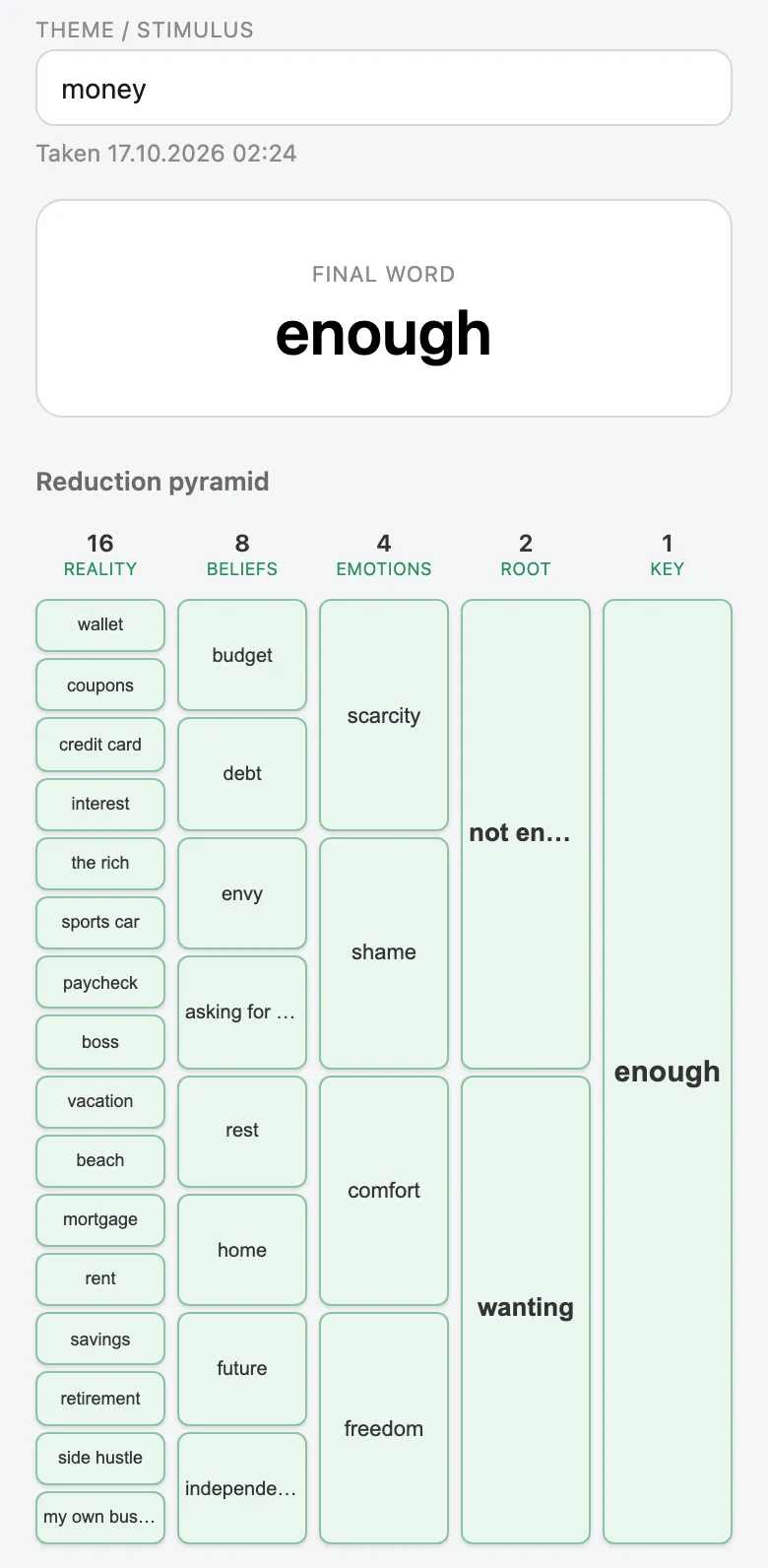
We made up this pyramid on "money" for the article, then took it in the app the same way anyone would.
Column one: how people around you talk about money
"Wallet", "coupons", "credit card", "interest", "boss", "paycheck" sound like other people's voices: ads, stores, kitchen-table talk. Toward the end come "vacation", "beach", "mortgage" and "my own business", the things you want.
What to look for in your own first column:
- which words came first and which came last;
- whether the tone gets lighter or heavier toward the end;
- whether some words sound like your parents, teachers or a boss.
For each of those words, ask yourself: "Do I actually think this, or is it just what people say?"
Column two: beliefs
"Budget", "debt", "envy", "asking for a raise". A familiar belief shows through: there is never enough money, someone else hands it out, and you have to ask for it. Next to it stand "rest", "home", "future" and "independence", where the same money looks very different.
If your second column holds a belief like that, test it:
- why do I think this is true;
- what is it based on;
- have I seen it work differently, for me or for people I know.
Column three: feelings
"Scarcity", "shame", "comfort", "freedom". Shame grew out of "envy" and "asking for a raise": it is awkward to want what others have, and even more awkward to ask for it. Feelings that seem unrelated to the topic often surface here, such as old resentment or the fear of being judged.
Ask yourself what each word has to do with your situation right now.
Root and key
The root holds "not enough" and "wanting": the person wants more and at the same time feels that what they have, or who they are, falls short.
The final word is "enough". It reads almost like an answer to the root and suggests a question to ask yourself: at what point would it feel like enough, whatever the number in the bank?
There is no fixed meaning for a final word. The same word means different things to different people, so look at what it means to you. If it is far from the topic, the real question may sit in another area of your life.
AI analysis
After the test you can get an analysis from Claude, a language model made by Anthropic. The model reads the whole pyramid: the topic, the 16 associations, every folding step and the final word. Here is its analysis of the same example:
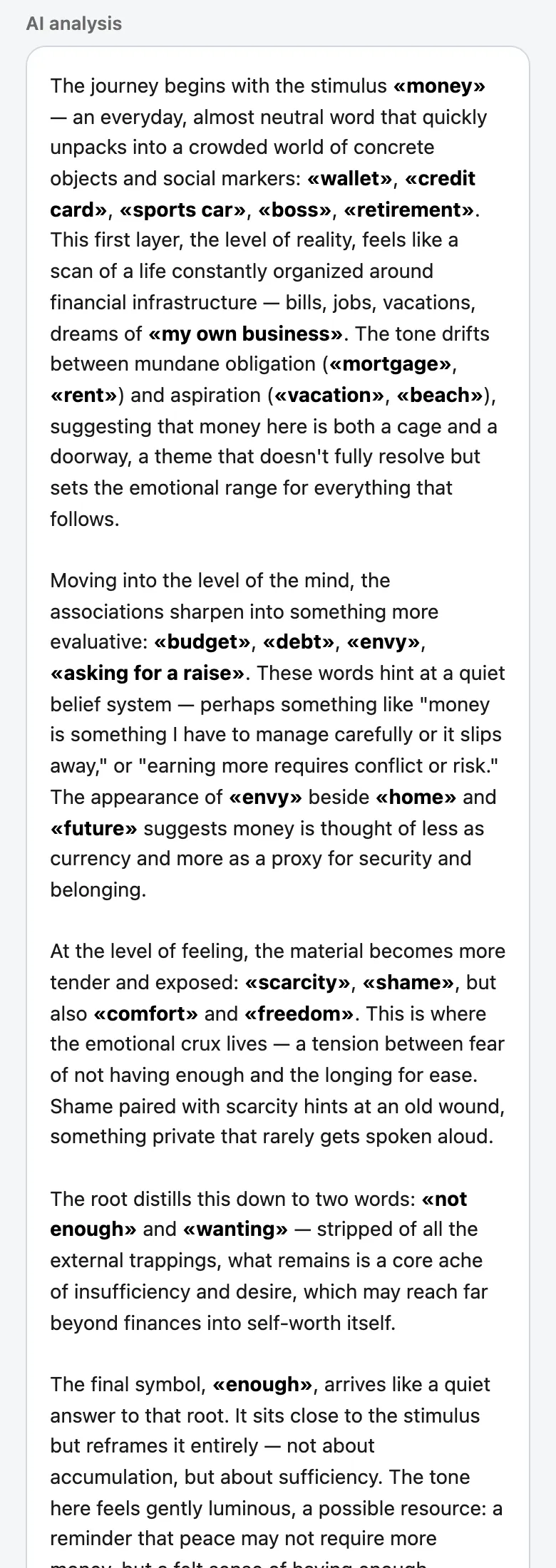

The analysis helps when the pyramid looks like a pile of words and does not add up. The model follows one thread from the surface to the final word, notices repetitions and gaps, and suggests readings that are hard to reach on your own. It usually ends with questions to think over alone or with a therapist.
It does not diagnose, does not give the one correct interpretation, and does not replace therapy. If the final word already explained everything, you don't need it.
There is also a combined analysis of several tests at once. The model then looks for what repeats across topics, such as the same beliefs showing up about money, work and relationships.
Your tests are stored in your account and only you can see them. When you order an analysis, the text of the test is sent to Anthropic to generate the answer. Anthropic states that API requests are not used to train its models.
Frequently asked questions
How long does the test take?
Usually 10–15 minutes. The sixteen words go quickly; the pairs take longer.
Can I write phrases instead of single words?
Yes. A short phrase like "my own business" is fine if it came to mind on its own.
What if no word comes?
Write whatever is in your head, even if it seems silly or repeats an earlier answer. Make a note of the spot: hesitation tells you something too.
Can I take the test again?
Yes. A few weeks or months later a pyramid on the same topic can come out completely different, and comparing them is interesting. If different topics end in similar final words, that is worth thinking about.
Is this really Jung's test?
No. Jung studied associations in the 1900s, but his experiment worked differently. The exercise with a 16-word pyramid appeared later, and its author is unknown.
How much can I trust it?
There is no research on the exercise's accuracy. It helps you notice things that usually slip by. If the topic is painful, talk the result over with a therapist.
Do I need to sign up?
You can take the test without an account. You need one to save the result, come back to it later and get an AI analysis.
Who can see my answers?
Only you. If you order an AI analysis, the text of the test is sent to Anthropic so the model can write the answer.